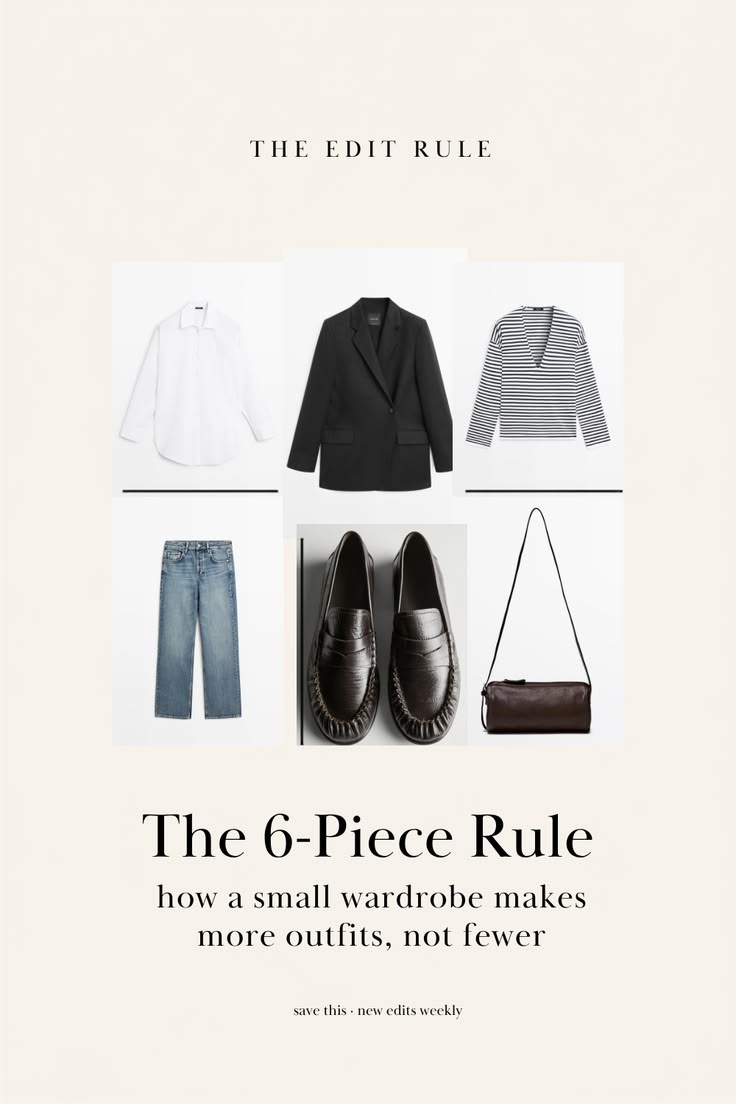
Everyone owns a white shirt. Far fewer people wear one, and the gap between those two facts is almost never about the shirt itself.
Knowing how to style a white shirt is less about the shirt and more about what happens at the waist, the cuff and the collar. Get those three right and one shirt produces three genuinely different outfits. Get them wrong and it stays on the hanger looking like an interview.
First, the shirt
Buy poplin, not a soft cotton. Poplin holds its shape after washing and it holds a collar upright without help, which is the difference between a shirt that reads as crisp and one that reads as crumpled by lunchtime.
The fit that works hardest is slightly relaxed through the body with a shoulder seam that sits exactly on the edge of your shoulder. Too fitted and it can only ever be tucked in. Too large and the shoulder collapses, which no amount of styling fixes because it is the one thing that cannot be altered cheaply.
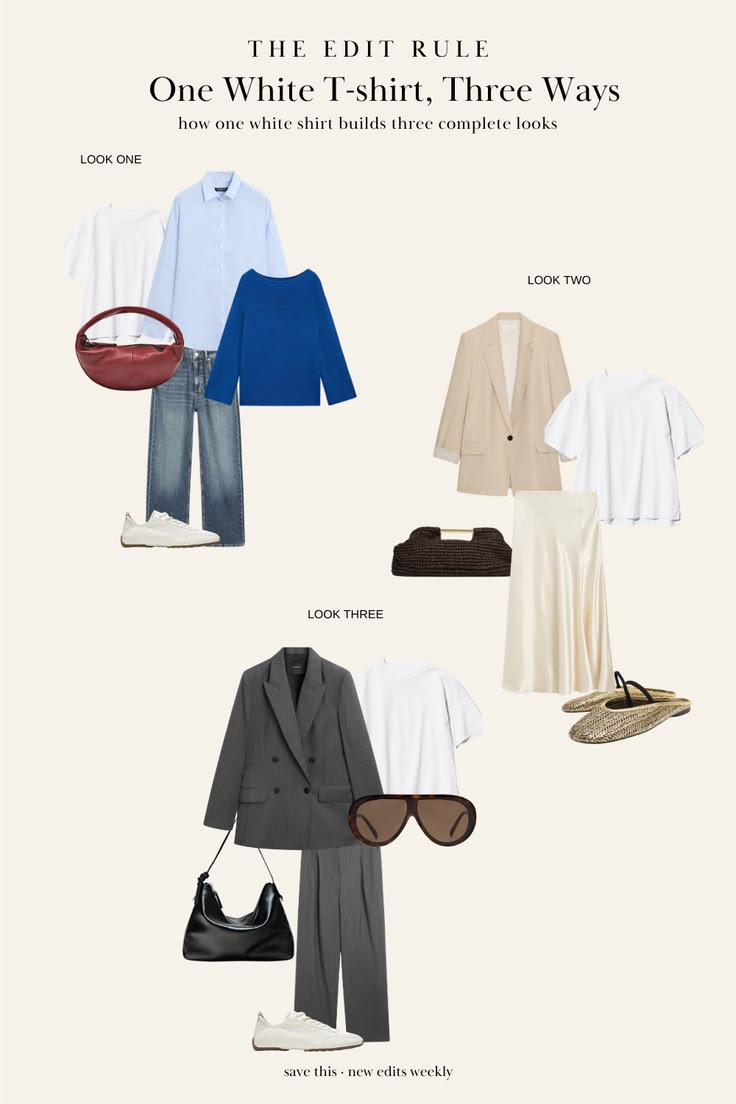
Outfit one: down, with jeans and a knit
The everyday version, and the one most people get almost right.
Straight-leg jeans, the shirt untucked or half-tucked, and a fine knit over the top with only the collar and the cuffs showing. That last detail is doing all the work. The shirt is invisible except at two points, and those two points are what make a jumper and jeans look considered rather than thrown on.
Roll the cuffs once over the knit sleeve rather than leaving them buried. Finish with loafers or clean trainers.
Why it works: two textures, one silhouette, and a hard collar against a soft knit. Contrast is doing the job that a statement piece would otherwise have to do.
Outfit two: up, with a blazer and a midi skirt
The smart-casual version, which is the hardest register to hit and the one this combination solves.
Shirt tucked into a midi skirt, blazer over the top, and a thin belt at the waist if the skirt has loops. The belt is not decoration. It creates a deliberate line where the shirt meets the skirt, and without it the eye has nowhere to stop between collar and hem.
Leave the top button open. A fully buttoned shirt under a blazer reads formal in a way that fights the skirt.
Why it works: the vertical line runs unbroken from collar to hem, and the belt marks the one place it is allowed to pause.
Outfit three: all the way up, with a tailored suit
The office version. Grey suit, shirt tucked, cuffs at the wrist bone, and nothing else competing.
This is where poplin earns its money. A soft shirt under tailoring bunches at the waistband and shows every crease through the jacket. A poplin sits flat.
One metal only for the jewellery. Gold or silver, repeated in the earrings and the belt buckle, and then stop.
Why it works: it is the least interesting of the three and that is the point. When the tailoring is doing the talking, the shirt’s job is to be silent and sharp.
The three details that separate these
Look back and the same three decisions appear in each outfit.
The tuck. Fully tucked reads formal, half-tucked reads deliberate-casual, untucked reads relaxed. It is the fastest register change available and it costs nothing.
The cuff. At the wrist bone for formal. Rolled twice to just below the elbow for everything else. A cuff left buttoned and slightly too long is what makes a good shirt look borrowed.
The collar. Buttoned to the top for tailoring, one open for smart-casual, two open with a vest underneath for weekend. Three open is a different shirt entirely and rarely the one you want.
What to check before you buy
Sit down in it. A shirt that gapes at the bust when seated will do it in every meeting, and a fitting room mirror will not tell you.
Hold your arms forward as if typing. If the shoulder pulls, the shirt is too small regardless of what the label says.
Check the fabric against the light. If you can read your hand through it, it needs a vest underneath permanently, which makes it a two-piece outfit rather than one shirt.
Keeping it white
The reason most white shirts stop being worn is not that they wear out. It is that they go grey, or yellow at the collar, and the owner quietly stops reaching for them without ever deciding to.
Both are preventable.
Grey comes from washing whites with everything else, and from too much detergent rather than too little. Excess detergent does not rinse out fully and it holds onto dirt. Use less than the box suggests and wash whites together.
Yellow at the collar and cuffs is not dirt, it is body oil oxidising over time. It responds to being treated before washing rather than after. A little washing-up liquid rubbed into the collar and left for ten minutes shifts it, because it is designed to break down oil.
Do not iron a stain in. Heat sets marks permanently. Check the collar before it goes near an iron, not after.
One more thing that extends a poplin shirt’s life considerably: hang it damp rather than tumble drying. Poplin dries flat and needs far less ironing if it is not crumpled while wet, and the heat of a dryer is what breaks down the crispness you paid for.
When one shirt is not enough
There is an argument for owning two identical white shirts rather than two different ones, and it is worth considering if the shirt is doing daily work.
Two of the same means you always have the right shirt available regardless of the wash cycle, and the pair wears out at half the rate of a single shirt worn twice as often. It is unglamorous and it is the reason people with genuinely functional wardrobes tend to own multiples of the things they rely on.
The alternative, a white and a pale blue, gives you more visual range. Both are defensible. What does not work is a white shirt and a second shirt with a detail on it, because the detailed one will always be the one left hanging.
The wider point
A white shirt is the clearest example of something this site keeps returning to: versatility is not a property of the garment. It is a property of the wardrobe around it and the three or four decisions you make when you put it on.
The shirt is the same in all three outfits above. Everything that changed was free.
It is worth testing this before buying anything else. Take the white shirt you already own and put it through the three versions above, properly, including the tuck and the cuff. If it works in all three, you do not need a new shirt and you have just added two outfits at no cost. If it fails in one, you now know exactly what is wrong with it, which is a far more useful thing to take shopping than a vague sense that you need something.
Keep reading
- The 10 Investment Pieces That Never Go Out of Style
- The Six-Piece Rule: How Six Items Make Ten Outfits
Save this edit
Pin it to your board so it is there the next time you are standing in front of the wardrobe. Save to Pinterest