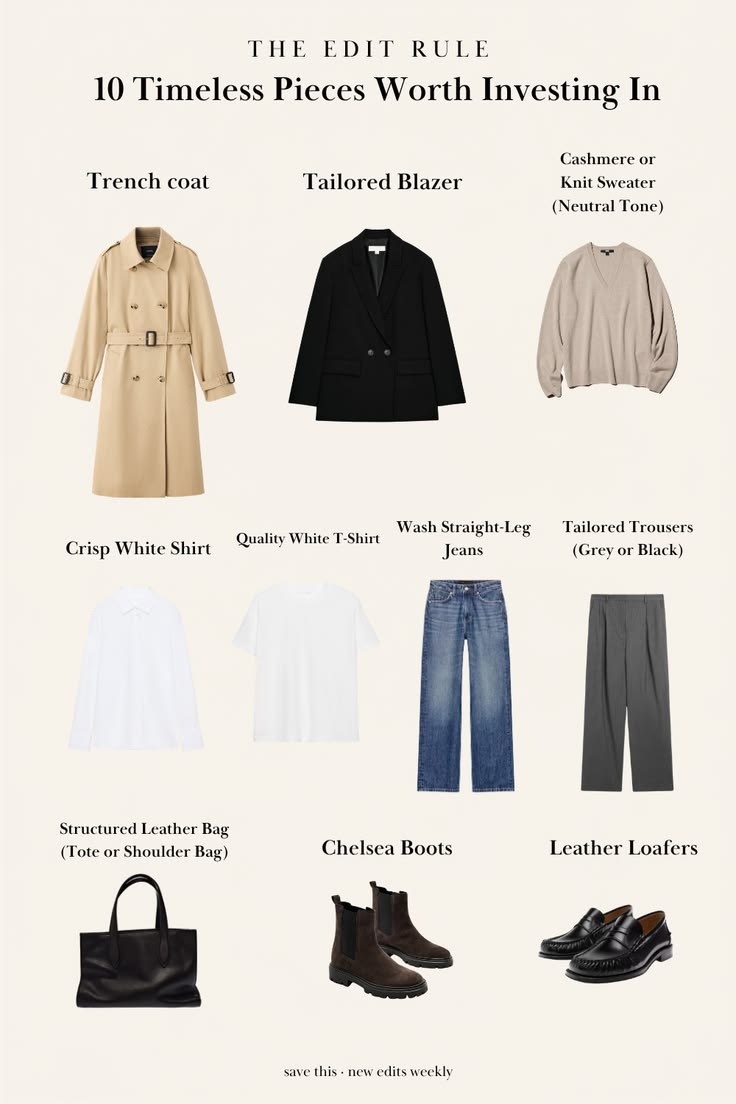
Shoes are where capsule wardrobe logic usually breaks down. People will happily reduce a wardrobe to twelve garments and then keep twenty pairs of shoes, most of which come out twice a year.
The reason is that shoes fail differently from clothes. A jumper that does not suit you sits in a drawer. A pair of shoes that does not fit properly is a decision you regret at eight in the morning, in the rain, at a bus stop.
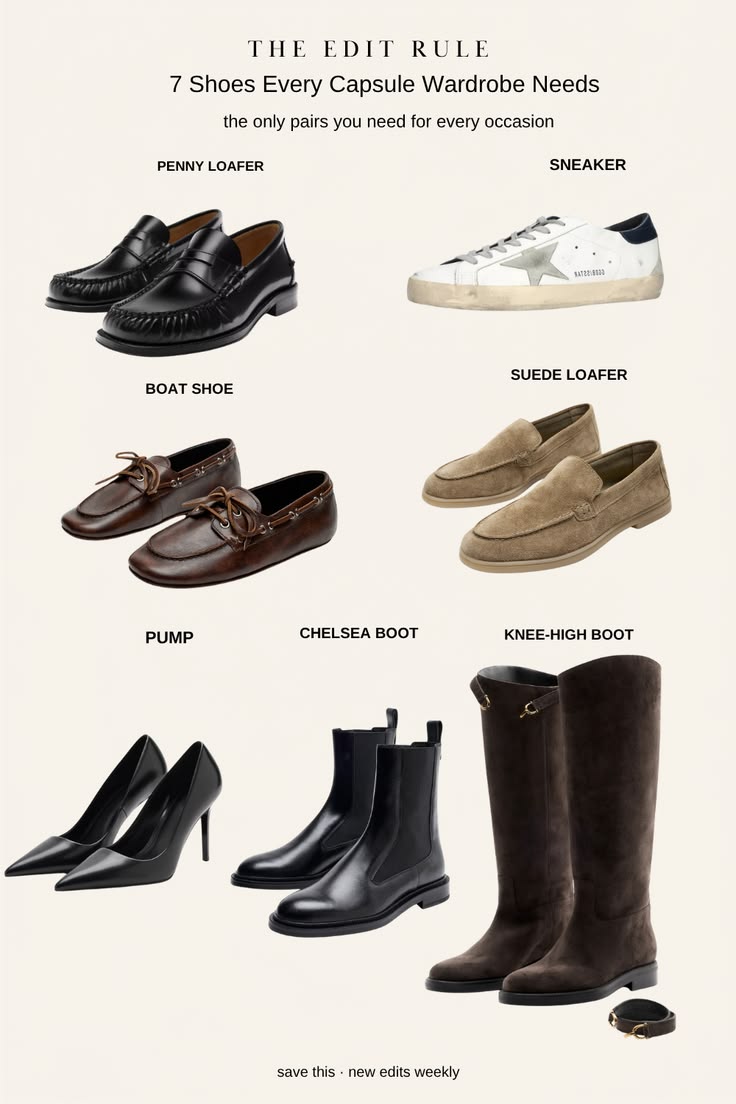
This capsule wardrobe shoes list covers seven styles, and between them they handle every ordinary occasion. What matters is not owning seven pairs. It is that the seven do not overlap.
1. Penny loafers
The most useful shoe you can own, because it is the only one that goes with trousers, jeans and a midi skirt without adjustment.
Brown is more versatile than black here, which is the opposite of most footwear advice. A brown loafer works with navy, charcoal, cream and denim. A black one demands the rest of the outfit agrees with it.
2. Court shoes
The pair for the day with a meeting in it. A pointed toe in a dark neutral, with a heel you can genuinely walk in rather than the one that looked best in the shop.
Anything above seven centimetres is a taxi shoe. That is a legitimate category, but it is not this one. This pair needs to survive a walk from the station.
3. Clean trainers
Not running shoes. A leather or canvas trainer in white or off-white, kept clean, which is the entire requirement.
The moment they scuff badly they stop working with tailoring and become weekend-only, which halves their usefulness. Buy a pair you are willing to maintain, or accept replacing them more often than the others.
4. Chelsea boots
The British winter answer, and the pair that will do the most work between October and March.
Check two things. The elastic panel should sit flush against the ankle rather than gaping, because a gaping panel lets in exactly the weather the boot exists to keep out. And the sole should be something you would cross a wet pavement in. A leather sole is beautiful and, in a British November, genuinely unsafe.
5. Knee-high boots
The pair that changes what a midi skirt or a dress can do in winter. Without them, half a wardrobe becomes seasonal.
Shaft width matters more than length and is the reason most knee-high boots are returned. Measure your calf at its widest point before ordering online, and be honest about the number.
6. Flat sandals
For the four days of British summer, and for holidays.
A leather flat sandal in tan or black is worth spending on, because the cheap version is uncomfortable in a way that is immediately obvious and never improves. This is the pair where the price difference is most directly felt on the foot.
7. Boat shoes or suede loafers
The relaxed option, and the one that fills the gap between a trainer and a proper shoe.
Suede is the more useful material here for anything other than high summer, and it pairs particularly well with the browns that a neutral wardrobe already contains.
What is deliberately missing
No ankle boots with a heel. No ballet flats. No mules. All perfectly good shoes, and all covered functionally by something already on the list.
That is the test for whether an eighth pair earns a place: not whether you like it, but whether it does a job none of the seven already do. Most of the time it does not, and the honest answer is that you want it rather than need it. Which is fine, as long as it is not disguised as a wardrobe gap.
The fitting room rules
Shoes are the one category where the shop and real life diverge most, so three checks are worth the two minutes.
Try them at the end of the day. Feet swell. A pair fitted at ten in the morning can be a size too small by six in the evening, and this is the single most common reason a pair goes unworn.
Walk ten steps on a hard floor. Carpet forgives everything. A shoe that grips at the heel on carpet will take skin off on pavement, and it will not have improved by the second week.
Try both feet. Most people have one foot slightly larger than the other, and shops habitually put out one shoe. Fit the larger foot.
Making them last
Shoes respond to maintenance more directly than any other category, and the interventions are cheap and quick.
Protect them before the first wear, not after the first stain. A spray protector on suede and a wax on leather takes five minutes and is the single highest-return thing on this list. Suede that has been sprayed survives a British autumn. Suede that has not, does not.
Cedar shoe trees for anything leather. They absorb moisture and hold the shape, and they prevent the crease across the toe box from deepening into a crack. Cheap ones made of plastic hold shape but do nothing for moisture, which is half the point.
Resole before it goes through. Once the sole wears through to the welt, a resole becomes a rebuild and often is not worth it. Caught earlier, it is routine and inexpensive, and a good pair can be resoled several times.
Heel tips are consumable. The small plastic tip on a court shoe is designed to be replaced. Walking on the exposed metal underneath ruins the heel itself, which is not replaceable.
Buying secondhand
Worth mentioning because shoes are the category where secondhand goes wrong most often, and where it can go very right.
The rule: buy secondhand shoes that have been worn a little, never ones that have been worn a lot. Leather moulds to the previous owner’s foot, and a heavily worn pair has a footbed shaped for someone else. That is uncomfortable in a way that does not improve.
What to check: the inside of the heel counter for wear, the sole for uneven wearing at the edge, and the footbed for a visible impression. Uneven sole wear indicates the previous owner’s gait, and the shoe has already adapted to it.
Boots and loafers secondhand can be excellent value. Court shoes rarely are, because the heel takes the load and the damage is not always visible.
On rotation
The dullest advice on this page and the most financially useful: do not wear the same pair two days running.
Leather needs a day to dry out properly between wears. A pair worn daily will last a fraction as long as the same pair worn every other day, which means a rotation of seven pairs is not extravagance. It is the thing that makes each pair last long enough to justify buying properly in the first place.
Where to spend and where not to
Not all seven deserve the same budget, and the split is not the obvious one.
Spend on the loafers and the Chelsea boots. Those two carry the most days per year and both are constructions where quality is genuinely felt underfoot rather than merely seen.
Be relaxed about the trainers. They are a consumable regardless of price, because the thing that retires them is looking scuffed rather than falling apart.
The court shoes sit in between. A mid-price pair worn occasionally will outlast the occasions, and the fit matters far more than the leather.
Keep reading